
Location: Micron Boise
Application type: UPW Wastewater RO
Semiconductors—commonly referred to as microchips—are essential components in nearly every modern electronic device. They function as both conductors and insulators, controlling the flow of electrical charge in circuits. The global semiconductor market is expected to nearly double in value over the next decade, growing from $530 billion in 2023 to nearly $1 trillion by 2033.
Producing over a trillion memory chips annually, the semiconductor industry relies heavily on ultra-pure water (UPW)—with some processes requiring up to 2,200 gallons per chip. UPW ensures that no contaminants interfere with the chip’s surface during fabrication, protecting product integrity and yield. Because UPW production is energy-intensive, efficiency improvements allow semiconductor manufacturers to cut electricity use, lower operating costs, and reduce their environmental footprint.
Micron targets Energy Use Reduction
Micron Technology, a global leader in memory chip manufacturing, depends on ultrapure water (UPW) to meet the quality standards of semiconductor fabrication. At the core of UPW production is reverse osmosis (RO)—a pressure-driven separation process that forces water through semi-permeable membranes to remove dissolved contaminants.
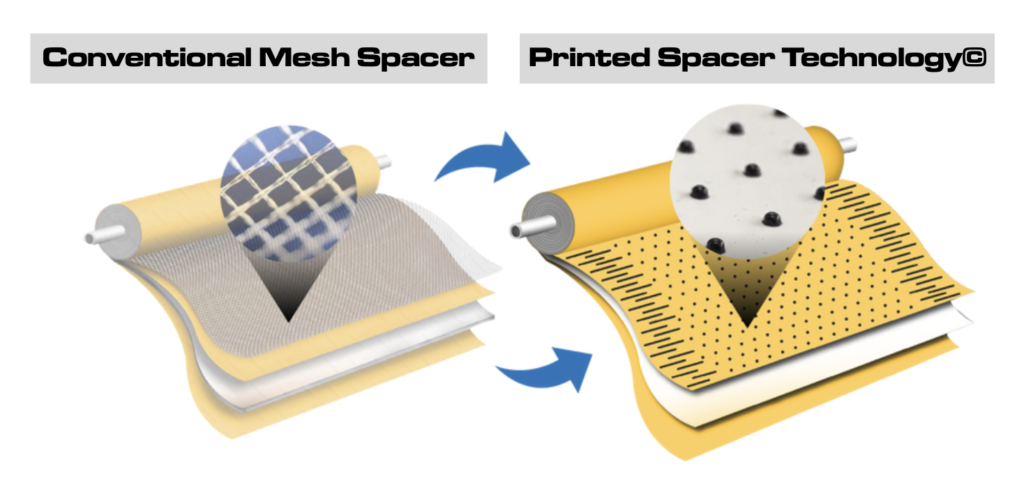
In conventional RO systems, flat-sheet membranes are wrapped around a central tube and separated by plastic mesh spacers, which form the channels that guide water across the membrane surface. While widely used, these mesh spacers have critical limitations: they create uneven flow paths, increase pressure drop, and promote fouling and scaling in stagnant zones. The result is higher energy consumption, more frequent cleaning cycles, and shorter membrane lifespan—all of which add cost, complexity, and emissions.
For a company like Micron, where water purity standards are incredibly high and where RO systems operate at massive scale, these inefficiencies pose a serious challenge—especially in light of the company’s ambitious 2030 sustainability goals:
- 42% reduction in direct greenhouse gas emissions
- 75% water conservation rate
- 95% reuse, recycling, and recovery rate for waste
- Zero hazardous waste to landfill (aspirational)
To meet these goals, Micron needed more than incremental improvements. It needed a fundamental upgrade to its water treatment infrastructure—one that could significantly reduce the energy, water, and maintenance burden of its RO systems while supporting greater performance and uptime.
The Solution: Printed Spacer Technology®
To reduce the energy intensity of its UPW and wastewater RO systems, Micron piloted Aqua Membranes’ innovative Printed Spacer Technology®. Unlike conventional feed spacers—which rely on bulky mesh—Aqua Membranes uses 3D-printed patterns applied directly to the membrane surface.
These precisely engineered flow channels occupy less space and reduce obstruction within the feed path. As a result, fouling and scaling are minimized, pressure drop is reduced, and the overall rate of membrane degradation slows. This allows for longer run times between cleanings, extended membrane life, and lower maintenance costs.
In pilot trials, these improvements translated to meaningful energy savings, fewer emissions, and reduced waste across labor, membrane use, and water—advancing both Micron’s profitability and its sustainability commitments.
The Results: Side-by-Side Testing at Micron Boise
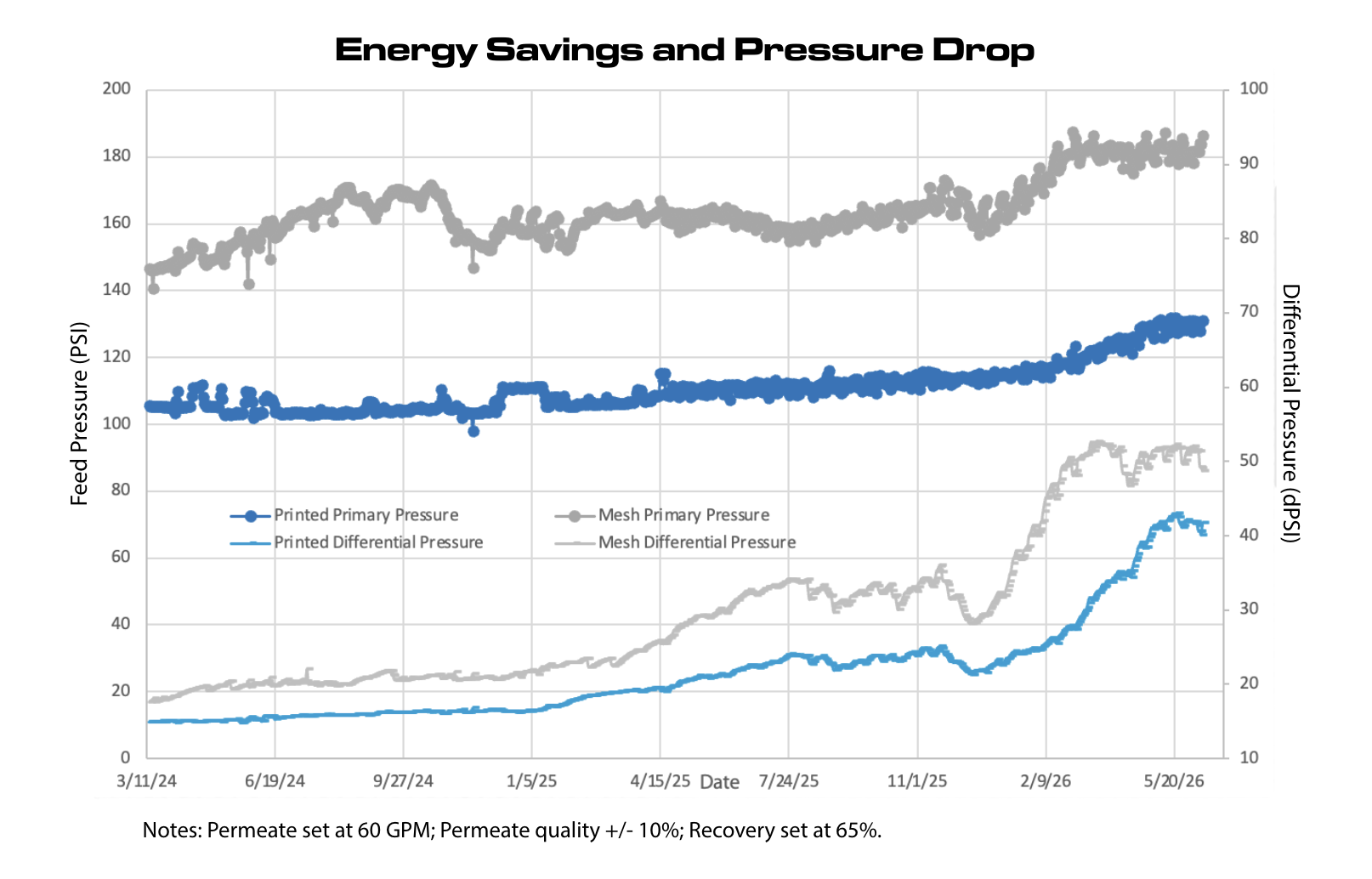
Micron and Aqua Membranes conducted a rigorous two-phase trial comparing our 8040 RO element to a standard mesh-spacer element using the same base membrane material. The pilot was run in a full-scale operational setting, and has been running continuously for more than two years.
Stage 1: April 2023 – January 2024
- 19% energy savings at startup, increasing to 22% over 9 months
- 4x slower fouling rate, as measured by differential pressure increase
Stage 2: February 2024 onward
- 29% energy savings at startup, rising to a peak of 35% within the first six months, and holding steady in the 30–32% range through more than two years of continuous operation
- Printed Spacer elements have taken 65% longer than mesh-spacer elements to reach a comparable differential-pressure cleaning threshold, with the fouling-resistance advantage persisting across the full multi-year dataset
System Level Benefits
The gains weren’t marginal—they were system-level. By reducing energy demand and fouling, Micron didn’t just save on electricity or cleanings—it unlocked higher uptime, longer intervals between maintenance, and more predictable water quality.
“Data doesn’t lie, and data like this shows the massive benefit of printed spacers” – Andrew Byrnes, Micron Ventures
Enabling Decarbonization Through Innovation
The semiconductor industry consumes enormous volumes of water and electricity. By upgrading membrane technology, Aqua Membranes offers a meaningful lever for reducing the energy intensity and environmental footprint of chip production.
For Micron, this isn’t just about emissions or sustainability—though it supports both. It’s about investing in membrane performance that scales across their operations, reduces long-term cost of ownership, and supports continued innovation.
Conclusion: From Pilot to Expansion
Micron’s Boise pilot proved that Printed Spacer Technology® delivers where traditional elements fall short. Following the success of this trial, Micron is now evaluating broader deployment across its global manufacturing footprint.